Showing posts with label car seat. Show all posts

Why Is The "Bundle Me" Not Safe In A Car Seat?

Almost every CPS out there DISCOURAGES the use of the Bundle Me in a car seat. 


This time every year, questions pop up all over the internet for ways to keep babies warm in their infant seats -- from the birth boards at megamom site BabyCenter, to local boards like Kingston.com, LIFamilies.com and HamiltonMomsTown in Canada.  And sure enough, we covered this topic last year at the Car Seat Poncho Blog:

The main reason the Bundle Me's are not recommended is that the part that goes behind the child's back is too fluffy and thick, and does not allow you to properly secure your child in the car seat. Fluff and bulk in FRONT of a baby and under the harness would compress in a collision, but fluff between the BACK of a baby and the car seat prevents the harness from being sufficiently tightened.

While a Bundle Me does allow the harness to be directly on the child's chest, it provides only the illusion of security because of the extra "air space" in the back.
 Here is the full article.

Low Speed Crashes Can Still Cause Serious Injury

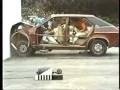
Especially if occupants are unrestrained.  A vehicle crash at 19mph (30 kmh) has the same impact on its occupants as a fall from a 3rd story balcony.  (Click link for video.)


This video footage may be dated, but the basic laws of physics have not changed.  Force still equals mass times acceleration.

I FINISHED MY ULTIMATE VIDEO!!!

I've always meant to make a video demonstrating the risk of a puffy coat in a car seat.  I have been madly shooting and editing so that I could release the video just before the Kids in Motion conference at the end of this week -- and it's finally done!


I hope this is helpful to CPSTs, Instructors and everyone out there who tries to persuade parents, grandparents and caregivers NOT to harness children over their winter coats. Please share it as necessary, and let me know what you think!

CBS, NHTSA: Babies Should Have Own Seats on Airplanes

As we head into the summer travel season, NHTSA issued an advisory for parents to buy their babies their own seats on planes.  There several sobering moments in this story that aired recently on CBS' Early Show, but I gasped when a mother recounted losing hold of her 2 year old during a turbulent flight, and watched his body slam into the overhead cargo compartment.  Thankfully the child did not suffer any permanent injuries.


Earlier this year, I compared holding a baby on your lap in an airplane to holding a baby in your lap on a roller coaster.  Airplanes travel faster and higher than roller coasters, so what's crazy at 700 feet shouldn't even be allowed at 3,000 feet.  And if babies are required to be in approved restraints when riding on the ground, shouldn't they be even more protected in the air?


For parents who do choose to buy seats for their children under the age of 2 (individual seats are required for anyone older), but want to lighten their loads:  infant seats can be installed without their bases, and children 22-44 pounds can use the CARES Kids Fly Safe Travel Harness, which costs less than $75 and can fit in a tote bag.

Space Bags Illustrate Puffy Coat Risk


Some people just do not believe that a puffy coat could really matter that much.  I think I have a way to illustrate the point:  Space Bags.


You know the commercial.  You know you really want one.  Put sweaters, blankets, or coats in the special zip loc bag.  Suck the air out of it with a vacuum hose.  Watch it shrink down and resemble a crumpled leaf.  Slide it under the bed and voila, no more puff.  Here's a thirty-second demonstration.


After the holidays I swear I'm going to get some at Bed Bath & Beyond and record my own demonstration.  If anyone else gets to it first, please let me know and link it to my Facebook or to the comments section!

2-Month Old Ejected From SUV (Alaska)

Found this story via Google Alerts. The child was not seriously injured (miraculously):


Tsk, tsk, though: The mom interviewed in the story (not the crash mom) says she does everything she can to keep her 5 month old safe and secure in his car seat, but when they show him, the harness straps seem absolutely un-tightened. Am I seeing this right?

Rear-Facing Advocate Is a Fan of the Car Seat Poncho!


Jim Peralta, aka "Grandpa Jim" is a fan of the Car Seat Poncho.  He purchased several for his grandchildren, and posted a link to our store on his website.


Jim is also a vocal advocate of extended rear-facing, because his grandson, Joel, was critically injured in a car crash.  The impact of the collision threw his body forward, and his car seat did its job of restraining him. But at 18 months, his skeleton was not mature or strong enough to keep his head from being thrown toward the front of the car.  Joel's neck was broken.


As Jim posted on Car-Seat.Org, "Some of the doctors put it in very simple terms...his skull, internally, became detached from his body... and was basically held on with his skin."


Babies and toddlers are not protected from neck and spinal cord injuries in the forward-facing position. The head is the heaviest part of the body at that age, and even at "low" speeds like 30 mph, a child's head would be thrown forward and pull the rest of the spinal cord with it. It's a very graphic term, but it's technically known as internal decapitation.  The American Association of Pediatrics recommends at least 2 years rear-facing, even better would be to rear-face to the height and weight limits set by your car seat's manufacturer.


Watch the news video: http://www.youtube.com/watch?v=vcG_CKT1j7c

Keep up with Joel's progress:  http://www.joelsjourney.org/index.html

Why Is the Bundle Me Bad in a Car Seat?

This questions comes up several times a year on parenting and safety boards across the internet:  Why do safety people tell you NOT to use the Bundle Me in a car seat?


The answer is that the portion that goes behind the child's back is too fluffy and thick, and does not allow you to properly secure your child in the car seat.  Fluff and bulk in FRONT of a baby and under the harness would compress in a collision, but fluff between the BACK of a baby and the car seat prevents the harness from being sufficiently tightened. 


While a Bundle Me does allow the harness to be directly on the child's chest, it provides only the illusion of security because of the extra "air space" in the back. In order for the harness to completely compress away that air space, it would have to squish down on all the baby fat, flesh and bone to an obviously ridiculous level.  No one would ever do that to her baby, so the extra space remains.  And THAT'S why the Bundle Me is bad for car seats.


To really illustrate the point, I want to highlight the excellent Bundle Me thread on BabyCenter's "Car Seat Questions" board that was posted early in 2009, by lullabymama.  She tested a real Bundle Me, a real car seat and a real baby to see if the fluffy back panel really made a difference, and took photos to document each step:

  • Step 1: Put Bundle Me on car seat, seat child and fasten harness to appropriate tension.

  • Step 2: Remove child, remove Bundle Me, re-seat and re-fasten child.

  • Step 3: Test harness tension by pinching harness straps above chest clip, near shoulder.  If more than 1" of strap can be pinched, the harness would be too loose to safely restrain a child in a collision.

Even I was surprised that the amount of slack!  I am going to bookmark that thread and refer to it whenever the question arises.  A picture is worth a thousand words, as well as the safety of your child.

Can car seats be any safer?


I posted the following to the Car Seat Questions board on Babycenter, and am interested to know what you think:

On a recent Babycenter thread, I cheekily suggested a seat that fills with foam upon impact (which might not be all that safe, I know), but what else could there be?

With higher rf weight limits, higher weight FF seats, and SIP becoming the standard for new car seat models, what other safety features could manufacturers consider adding to car seats?


One thing that I could see is emergency locking retractor belts in car seats -- the kind that are sensitive to rapid deceleration, and have an inertial mechanism device that pulls the seat belt taut upon impact? I think the Safeguard seats had them (correct me if I'm wrong), but that seat was so expensive, and I believe Safeguard is no longer making that model.

Other ideas?

The Car Seat Poncho vs "The Coat Trick"

Next on my to-do list: a demonstration video.  I want people to see how fast they can get their children into the car seat, buckled and be on their way with the Car Seat Poncho. 


There is an excellent, and popular video by Madeline410 demonstrating what's known in some CPS circles as "the coat trick". 


Basically, the trick is to:

  1. Before you go out, slip one of your child's arms through one sleeve

  2. Slip the child's other arm through the other sleeve

  3. Zip up the coat

  4. Go out to the car and put your child in the seat

  5. Put his or her arms through the straps

  6. The bottom of the coat out from under the straps on one side

  7. Pull the bottom out on the other side

  8. The collar and top of the coat out from the straps on one side

  9. Pull the collar and top of the coat out from the straps on the other side

  10. Buckle the crotch and chest clips

  11. Tighten the harness

  12. Zip the coat

... and then you can be on your way (unless you have more children to coat-trick).


Now, I think the coat trick is a great trick, and a great way to keep kids safe and warm in the winter.  But the Car Seat Poncho is much easier. 


Here's what you do with the poncho:

  1. Before you go out, slip the poncho over your child's head

  2. Go out to the car and put your child in the seat

  3. Spread the poncho around the top and sides of the car seat

  4. Open the zipper from the bottom


  5. Buckle the crotch and chest clips


  6. Tighten the harness


  7. Pull down the zipper to close


Much easier, much quicker, right?  The video is about one minute long, and I'm pretty sure the poncho takes less than half that.  And if you have more than one child, that's a lot of time saved and a lot of hassle avoided.  Maybe I can get two moms and two kids, and do a split-screen comparison...


When I get it done, I'll debut it here first.  Blog readers deserve some perks and exclusives, right?

"When I was a kid..." doesn't cut it with car seat safety.

I was pleased to read this post on the Kyle David Miller Foundation Blog recently, about how practices that seemed safe a long time ago are now known to be unsafe. Think about how much more we know today, about cigarettes, asbestos, pre-natal healthcare, bisphenol A!

I wrote a similar piece as a press release last year, and posted it on the website. Same idea, with data and footnotes. Here it is, in case you missed it:

July 8, 2008

"Back in the day..." is no excuse for slacking on safety.


Many people dismiss car seat safety, saying, “When I was a kid, we didn’t ride in car seats, and we turned out fine.” They go on: "We sat five across on a bench seat, no belts... My parents took me home in a laundry basket on the floor of the back seat... I used to ride in the front seat between my mother and father..." (Of course, the voices of those who were not so lucky to have "turned out fine" are not being considered!)

While skeptics may use their own childhood experiences as references, they should remember that it’s not just the type or number of products that's different: The nature of driving itself has changed significantly in the past 30 years:

1. There are 300% MORE CARS on US roads now than when we were kids.

According the Federal Highway Authority, the number of passenger vehicles has steadily risen, from 74 million in 1960 to over 231 million in 2004.(1) That means more traffic, more congestion, less parking, and more road rage. And drivers' attention is more divided than ever, with cell phones, DVD players, GPS systems -- not to mention non-technical distractions like eating, putting on makeup, or settling arguments between backseat passengers. Every one of these can be a factor in a collision.

2. The average US motor vehicle is nearly 20% HEAVIER than the ones we used to ride in.

According to the Center for Auto Safety, the weight of the average passenger car increased from 3,227 pounds in 1980 to 3,868 pounds in 2000. (2) Even at relatively low speeds like 30 miles per hour, the 600+ pound increase in one or more of the cars’ weight could dramatically increase the damage of a crash. Add to that the wider range of weights in the vehicles on today’s roads (from the Honda Civic DX at 2,628 pounds (3), to the AWD Cadillac Escalade at 5,708 pounds (4)), and the possibilities for injuries and fatalities are even greater.

3. The average American child spends MORE TIME in the car than ever.

The National Household Travel Study, released in 2003, found that three fourths of children aged 5 and younger rode in private cars daily, averaging 65 minutes per day. In reporting the study, the Washington Post wrote that younger children, not yet in school, probably spend significantly more time in the car than that. (5) Those with stay at home parents go wherever (and whenever) Mom or Dad goes, and those with working parents often drive with them to day care near the workplace. Suburban sprawl also makes a difference: "Fetching a carton of milk used to mean toting children along to the corner store. Now it means strapping them in for a 20-minute drive to K-Mart." (6) The more time spent in the car, the more risk of being in a collision. That's why most car crashes tend to happen close to home, not on the highway -- we spend more time close to home!

Safety improvements like seat belts, air bags and car seats have helped decreased the number of deaths over the past 30 years, but motor vehicle injuries are the leading cause of death among children in the U.S. (7) They still cause about 25% of injury deaths among children 12 and younger. (8)

We all have anecdotes about how our childhoods were simpler. Some may argue that the old days were better, and in many ways, they were. But there is no question that advancements in technology and communications have also enhanced (and prolonged) our lives. So resist the temptation to disregard today’s safety advice. Make sure your kids stay safe whenever they are in a car, so that in years to come (when their world is unrecognizable to us!), they, too, will be talking about "back in the day."

SOURCES:
1 US Department of Transportation, Federal Highway Administration, number of motor vehicles since 1960.
2 Statements of Clarence M. Ditlow, Director, Center for Auto Safety, to the Senate Committee on Commerce, Science and Transportation, December 6, 2001.
3 US News & World Report, Automotive Rankings & Reviews, 2008.
4 Cadillac.com, 2008 AWD Escalade, Vehicle Information, Curb Weight
5 WashingtonPost.com, “The Road Too Much Traveled: For Many Children, Drive Time Just Keeps Going,” January 27, 2003
6 WashingtonPost.com, January 27, 2003
7 CDC. Web-based Injury Statistics Query and Reporting System [online]. National Center for Injury Prevention and Control, Centers for Disease Control and Prevention (producer). Available from URL:
www.cdc.gov/ncipc/wisqars. [2008 May 5].8 National Center for Injury Prevention and Control. 2003. Web-based Injury Statistics Query and Reporting System. Atlanta, GA. Available: http://www.cdc.gov/ncipc/wisqars/.


(This article was originally published on
http://www.carseatponcho.com/.)

About Donna Eng:
Donna Eng is the inventor of the Car Seat Poncho, and the CEO of H Barry Boo LLC. She invented the Car Seat Poncho at her dining room table, after searching in vain for a product that would keep her son both safe and warm in his convertible car seat. Prior to founding H Barry Boo, Eng had a 15-year career in advertising and market research.

About the Car Seat Poncho:
The Car Seat Poncho is the safe alternative to a coat for children who ride in a convertible car seat. Regular winter coats are often too thick to allow the safety harness to fasten properly, which could lead to the ejection in a crash. The Car Seat Poncho is the easy way to keep a child safe and warm in the car seat, and is more convenient than a coat because it can be worn outside of the car as well. The Car Seat Poncho is available online at
http://www.carseatponcho.com/, and is patent pending.

Related Posts Plugin for WordPress, Blogger...